
Commercial solar case study
Luz Solar case study: commercial rooftop leads with the decision maker in the room
Stephen James of Luz Solar has built commercial and large-scale solar since 2010. Starting commercial rooftops again on a lean model, he uses TNW to get in front of MDs and finance directors, and says not one lead has been a waste.
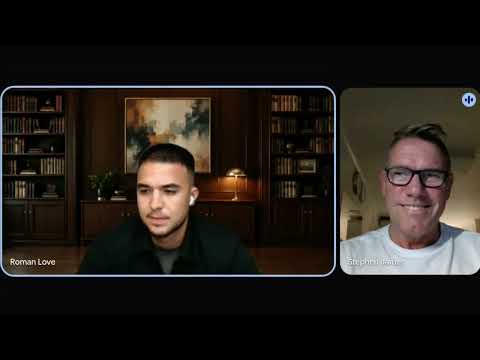
Watch the full interview with Luz Solar. This page summarises what they told us on camera.
Full interview transcript
Read the full transcript of the Luz Solar interview
Word for word from the recording of the whole interview call, with filler words such as “um” left out. The video above is an edit of this call, so a few parts here are not in the video.
How's it going? There we go. Got you there, but you're just on mute. There we go. Sweet. So thanks for jumping on. Just basically wanted to ask some questions about your experience working with us. And then we have a quick chat after if you want. sure. Perfect. So Stephen, would you like to introduce yourself and talk a little bit about Luz Solar?
obviously my name's Stephen James, I've been involved in the renewable sector since 2010, going back in the good old days, when we had feed-in tariffs. Luz Solar started as a developer for domestic sites, we developed and actually built out for an investment company, just short of a thousand properties back in the days, moved into large scale commercial businesses, rooftops, we actually did the largest back in 2012, which was just short of a megawatt. In Oldham, so that was a milestone for the UK and for us, and that sort of propelled the business into some pretty large portfolios of PPA. And paid for systems. We built a team up to 30 staff, moved into the large scale sector, which was ground mount solar. Our first solar site was down in Cornwall, which was a 10 megawatt site, and we developed about 220 give or take commercial solar projects in the UK.
We did a lot of work abroad as well with partners.
Worked in Egypt, South Africa, Pakistan, not so nice. so I mean, obviously then the market crashed in the UK, so the original company was shut down due to just massive losses. developed huge pipelines and became... Work's overnight, so I went working abroad, I worked in Brazil for two and a half years, came back to the UK and then started all over again, so we're now developing life-scale solar, battery storage, and just started to really start again with the commercial rooftops, hence our sort of ability to talk today about TNW, so. Brilliant.
And you mentioned before that you were at a much more sort of lean model this time.
back in the days we used to develop in-house, and I looked at companies and I wasn't sure what I wanted to get back involved in doing that, which sort of brought me into what you guys do, which is pretty much exactly the way that we used to develop, and try and sort of... Get quality leads and speak to the, you know, the top business owners, the directors or the FDs, and you do all of that work now, so it saves me a massive headache, and obviously a lot of time and efforts, trying to find the right client to match us. keeps you nice and clean. absolutely. I don't want to be sacking 30 people again and saying, I'm sorry, there's no work for you anymore. So we do, we keep it lean. We've got an engineer, electrical engineer, designer, we've got technical designers, and we've got a good team of installers that have worked over the years with us that have huge sort of experience in actually putting the right projects and doing it properly. So everything's outsourced pretty much.
And in terms of our service, which part has been the most valuable to you?
I think just the quality, the quality of actually speaking to the decision makers. I think that's the most important thing. You're never going to get a good hit rate, a massive hit rate in dealing with these commercial sites because they always tend to come up with excuses that they're not ready or it's more expensive. I think the climate at the moment is people are sort of holding on to the purse strings just in case it gets worse rather than better, you know. So, you know, it's, I think just simply it's the quality of the lead that comes in. You know you're speaking to the right people. That decision obviously is down to the actual business and the business owners and, you know, ultimately nobody can force a guy to put solar on the roof. Because it doesn't matter how good an opportunity and a savings they make, it comes down to purse strings and cash flow. So not one of the leads has been a waste, to be honest. They also tried to sort of evolve into actually installing. So we were at two of the leads now that we've had. We've only had, I think, five or four that we've actually done site visits on. You know, that's 50% is pretty good. Okay, brilliant.
That's great to hear.
And have you worked with other lead generation agencies before? I have. Smiling.
Not for this company.
When I came back from overseas, working with some big companies, Trina Solar, the one of the partners, we had some heavy hitters. And, you know, in Brazil, particularly. I came We did very well. When I came back, for personal reasons, I started to look at getting back involved. I went working actually for a company, which was the first time in God knows how many years, working for somebody else. They wanted to get involved in the commercial sector. And the stuff that I did came well, but the stuff we were trying to buy lead-wise, it wasn't a good experience, to be honest. They were shelled out to three or four other companies. They weren't particularly good in meeting the correct person, i.e. the decision makers. And, you know, they're not cheap, but it was just shelled out. You know, you're in competition, you paid for a lead, and suddenly you've got four other companies being sold that same lead.
So, it wasn't a good experience.
Okay.
And were they, like, doing book-to-point moments, or is
No, it was just a very poor, poor companies, and ultimately we ended up claiming a lot of the money back because it's just a waste of time. You're wasting my time and you're wasting the client's time. know, it's suddenly you're getting leads through and they're not really being qualified properly. You know, this person might be interested is not a proper bona fide lead. You know, the clients I've spoken to with your company, they are very interested. Whether it's the right time is irrelevant. They are interested and you do get the right information to hand for us to actually put a proper proposal together for them. But I've not seen too many lead generators because, like I said, back in the day we used to do our own stuff. Okay. Like Sonya, in a similar way, but internally. Nice, and I think you covered a couple of those points, but in terms of the actual service provided, was there any sort of like key differences that you noticed from previous experiences with other leadership agencies or agencies or any example of that? the main one is actually speaking to a business owner that's actually really interested in looking at the solar opportunity to reduce their energy bills and go a little bit greener with regards to where the energy is coming from. And also, there's not a massive competition, you know, rightly so, the MDs or the FDs will want to go out to tender and then see if they're, you know, they're being given the right price structure and the right designs, which I don't mind because, you know, if we do our job properly and we sell it properly and give them the right information, you know, it's up to us to sell that. The Client, rather than it being sort of in the mix from day one or four or five people going in the same auction, so. that makes sense.
And in terms of the sort of average deal size that we've sort of giving to you guys at the moment, what are we sort of looking at? 100kW, a bath, where are supposed to say it?
again, I can explain why I've gone for 50 up to 400 maybe. Past experience has shown me that when you're looking at the megawatt size systems, you are, it doesn't matter what knowledge and experience you have, and clearly we, you know, the team that I've got around me have massive amounts of knowledge and experience in putting the right stuff together. But when it comes down to... The size of that, you know, that sort of thing, the megawatt size, you are, it comes down to the size of the bank balance and companies that have been trading for 30, 40 years in this industry, when you're talking about shelling out millions of pounds, tend to get the tenders and tend to get the actual job. So you tend to be wasting your time, getting to a point where you're in the last three and suddenly, you know, your accountants are looking, their accountants are looking at bank balance sheets and, you know, security, which is fair enough. It's just for us, as a company, our size, and they say, we haven't grown because we don't want to grow, and makes a big difference in the projects that we look at in size-wise, so 50 to 400. It's a good sweet spot for us. Perfect, think with those bigger projects as well, you're recommending DNO approval, all of that. Well, planning, I mean, yes, I think it's quite nice now that you're getting government support in a planning application as permitted developmental tour. think it's up to a megawatt, isn't.
Okay.
And in terms of the volume of leads that we've been sort of like presenting with you guys, what was that like as well as that song? I think it gave us plenty to look at. We made the commercial decision to get, I think, the first few across the line just to make any decisions to take more and more and more of. You know, there's a lot of work that goes into it, unless you've got 50 staff, or 30 staff, working on individual projects. For example, one of the sites that we've got on the go at the moment required an asbestos survey, it required a structural survey, and obviously the DNO is not an issue, we could deal with those all day every day, but when you're talking about these sorts of structural surveys it takes time and effort to get these things done before you can actually install, so I'm not saying they're all like that. But certainly, one of the sites we have in Birmingham has gone through that process where we've had to do structural, we've had to do asbestos, you know, to actually get the region some form of shape to actually installs that I'm wrong, so not the ideal scenario when you've got asbestos brews, to be honest, that's typically saying it's a 1950, 60, 70 building that's not structurally sound, to be honest. Okay, that means...
So any advice? Don't take those ones on.. I mean, I guess the benefit of you can ask is that you have the option to see what information there is beforehand and then you can sort of decide what you to ask for. absolutely.
And, you know, knowing how much work and effort it is for building regulations and asbestos and overclad quotations and such, like, it's not something that we'd probably go near again. Well, I'll make a note on the system for that..
what were you going to say?
No, no, it's, no, I'm just, that's not something, you know, I could take them all on but it would take, you know, months per try to get to a stage where the decision was made on a, once they've served us done.
mean, clearly they'd be… You
The business owner was very keen to get this thing done because he wouldn't have taken it so far and, you know, and spent all of his time as well taking on site surveys and stuff like that. 100% and in terms of the customer service, how is that for people wanting? I have no doubts that I'd be using your company and I'd recommend it to other companies, I would. It makes life a lot easier, so, you know, you've got a staff there that are constantly on the phone if I need them, just to go through what they find at once and if any questions, it's always, so it's been a very good service. Brilliant, I really appreciate that and that's exactly what we're trying to achieve, trying to make sure that, you know, everyone's always available if you need us.
Still to answer my next question, which is, you would you recommend us? The typical answer I get there is, you know, I don't want to endorse my composition.
No, listen, for a company our size, I mean, like to say, we reduced our size because it's a very, I don't know trying to a word, it's an unknown, this industry. You know, I developed huge, huge numbers of sites, whether it be commercial or large scale, mainly large scale, that, you know, just a turn in a policy can change the whole thing overnight, so try and keep it simple is the best way. And we can, you know, we can only take on so much work at this stage, so, you know, I won't be taking all of your leads because, you know, they come through thick and thick. They're fast don't they, you know, I wouldn't be taking them all on, so I'm sure there's plenty of installers out there, we'd appreciate a quality lead, which I believe yours are, as I say, how I used to do them ourselves internally, so. Brilliant. Well that, thank you very much.
- Interviewee
- Stephen James, Luz Solar
- In renewables since
- 2010
- Projects he targets
- 50kW to 400kW commercial rooftops
- Site visits so far
- Four or five, two moving towards installation
Who Luz Solar are
Stephen James has worked in renewables since 2010. Luz Solar started out developing domestic sites, building just short of a thousand properties for an investment company, then moved into large commercial rooftops. In 2012 it built what Stephen describes as the largest at the time, just short of a megawatt in Oldham, and went on to ground-mount solar, starting with a 10MW site in Cornwall. Over the years the business developed around 220 commercial solar projects in the UK and worked abroad with partners.
When the UK market crashed, the original company closed. Stephen worked overseas, including two and a half years in Brazil, then came back and started again. Luz Solar now develops large-scale solar and battery storage, and has just started on commercial rooftops again.
The situation
This time Stephen runs a lean business: an electrical engineer, designers and a team of experienced installers, with everything else outsourced. Back in the day Luz Solar found its own commercial clients in-house; he did not want to build that team again.
His earlier experience of bought leads, at a company he worked for after returning to the UK, was poor. Leads were shared out to three or four other companies, they were not qualified properly and often did not reach the decision maker. In the end they claimed a lot of the money back.
What TNW delivered
For Stephen the most valuable part is the quality: speaking to the MDs and finance directors who make the decision. The clients he has met through TNW are genuinely interested, whether or not the timing is right yet, and he gets the information he needs to put a proper proposal together.
Commercial buyers will still want more than one quote, which he is happy with, but he is not one of four or five companies sent into the same auction from day one.
Luz Solar targets systems of 50kW to 400kW. In his experience megawatt-scale tenders tend to go to companies with large balance sheets, so that range is the sweet spot for a business of its size.
There have been plenty of leads to choose from; Stephen made a commercial decision to get the first few across the line before taking more. One site in Birmingham needed an asbestos survey and a structural survey before anything could be installed, and he would not take one like that again. Because every lead comes with its details first, he can see that beforehand and pass.
He describes the service as very good, with a team always on the phone to go through any questions, and says he would use TNW and recommend it to other companies.
The model behind it is the same for every installer: TNW finds and qualifies the business, books the meeting into your diary and you pay per qualified, attended appointment, not per raw enquiry or a monthly retainer. Read how pay per appointment commercial solar leads work, or see the checks behind each booking in how to qualify commercial solar leads.
Results
- Every meeting is with the decision maker: MDs and finance directors who are genuinely interested in solar.
- Of the four or five sites he has visited, two are moving towards installation, about 50%.
- Not an auction: he had paid before for leads that were sold to three or four other companies.
- His sweet spot is 50kW to 400kW, and the detail up front lets him turn down the sites that are not for him.
“Not one of the leads has been a waste, to be honest.”
Want results like Luz Solar?
TNW Marketing books pre-qualified, exclusive commercial solar site meetings for installers. TNW's show rate is 60%+, and you pay per qualified, attended appointment with no retainer and no minimum spend. See the commercial projects ready for survey now.
More client results
 Sam Ward Electrical case studyFive to ten qualified leads a weekday to pick from, paying only when a qualified survey goes ahead.
 Get Zero case study18 leads taken in July, a 75kW + 100kWh battery close and a 300kW project in the pipeline.
 Castle Eco Solutions case studyFive surveys with an MD or finance director at every one, and a near 900kW job progressing.
See all 29 commercial solar installer case studies, plus residential solar results.
Related guides for installers
- Pay per appointment commercial solar leads
How paying per attended site appointment works, how it compares with pay per lead and retainers, and what counts as an attended meeting.
- Solar leads UK: compare providers
Solar installer leads for sale in the UK: 15 providers compared on lead type, price, contract and no-show terms, and pay per appointment from £250.
- Lead Pronto alternatives for solar installers
What Lead Pronto offers, from its own website, and ten alternative UK solar lead suppliers compared on lead type, exclusivity, price, contract and no-shows.
- Bark review for solar installers
How Bark credits are priced, when they expire and come back, the first-pack guarantee, and who Bark suits, from Bark's own terms.
- Leads 2 Trade review
Leads 2 Trade's four solar lead types, how many installers get each, its rejection rules, fees and notice period, from its own site.
- Leads Everyday review
The Google Ads model, the flat monthly fee plus ad spend, the two-month minimum term and the alternatives, from its own terms.
- Watts Marketing review
Exclusive homeowner solar appointments: what Watts checks before booking, its returns policy, no contract, and who it suits.
- Exclusive vs shared commercial solar leads
What each costs and why, who carries the no-show risk, how to check a supplier's exclusivity claim, and when shared leads can make sense.
- In-house vs outsourced lead generation: the real cost
What an in-house appointment setter really costs, line by line, against buying booked appointments, with a cost-per-meeting calculator.
- Pay per lead in the UK
What counts as a lead, published UK prices per lead, returns and exclusivity, and when paying per attended appointment makes more sense.
- Lead generation companies in the UK
Telemarketing, outbound, digital and pay per lead companies compared by what they do and how they charge, with the questions to ask first.
- Pay per lead vs retainer vs pay per appointment
Cost, risk, contract terms and lead quality side by side, and when a retainer can still make sense.
- Choosing a solar marketing agency
Full-service agencies, lead suppliers and pay per attended appointment lead generation compared, the channels that win commercial work, and what to ask before you sign.
- Renewable energy marketing agency (UK)
Renewable energy marketing services compared, inbound vs outbound, retainer vs pay per attended appointment, and why commercial solar is the one thing TNW does.
- Appointment setting for solar installers
What appointment setting is, how agencies charge, in-house vs outsourced setters, UK rules on B2B calls and email, and what to ask before you sign.
- Commercial solar tenders and frameworks
Where UK solar PV tenders are published, which public sector frameworks have solar lots, what buyers ask for and how bids are scored.
- Commercial solar PPAs for installers
How a rooftop or private wire PPA works, the parties and contract terms, which customers qualify, what funders ask for, and the alternatives.
- Public sector solar work for installers: PSDS, Salix and GB Energy
What has closed (PSDS) and what is open now: Great British Energy solar for schools and the NHS, Salix loans in Scotland and Wales, and how installers win the work.
- Offering finance on commercial solar
Hire purchase, leasing and PPAs compared, and when the FCA rules on credit broking apply: individuals, the £25,000 business exemption and introducer ARs.
- Warm Homes Loan Scheme: what commercial installers need to know
Why businesses and SPVs can't use it, how mixed-use farms, holiday lets and landlords can, and what a business customer can use instead.
- Solar EPC contractors explained
Engineering, procurement and construction vs design and build, the FIDIC, NEC and JCT contract forms, typical EPC terms and subcontracting to an EPC.
- VAT, CIS and the reverse charge on commercial solar
The VAT rate on commercial jobs, when the construction reverse charge applies, invoice wording, and CIS registration, deductions and returns, from HMRC.
- Roof overcladding or replacement before solar
For roofers and solar installers: overclad or re-roof first, asbestos and structural checks, RC62 fire classification, the Part L upgrade, sequencing and tax.
- UK solar statistics: the commercial market in numbers
Official UK solar statistics: capacity and installations by size band and region, growth trends, 2030 targets and business energy prices, all with sources.
- UK commercial solar statistics (data tables)
Year-by-year DESNZ tables since 2010: capacity and installations by size band, the commercial bands month by month, generation and share of electricity, with a CSV.
- LinkedIn lead generation for commercial solar
Win commercial solar site surveys from LinkedIn: who to target, Sales Navigator vs free, example messages, LinkedIn's limits and the UK data rules.
- Cold email for commercial solar
Cold email for commercial solar: who to email, UK rules (PECR, UK GDPR), deliverability set-up, example emails and follow-ups, and what it really takes.
- Cold calling commercial solar
Book commercial solar site surveys by phone: call lists, TPS/CTPS screening, switchboard, opening, qualifying and objection scripts, and the UK rules.
- Solar telemarketing for installers
What an outsourced solar calling campaign does, how telemarketing agencies charge, who is liable under PECR, the brief to write and the questions to ask.
- B2B cold calling rules in the UK
PECR, TPS and CTPS screening, the 28-day rule, bought-in data, named contacts and UK GDPR, agencies and ICO fines, with a compliance checklist.
- Carbon credits, offsetting and selling commercial solar
Why businesses ask about carbon credits, why UK rooftop solar does not earn them, and how to show the scope 2 cut in a proposal with the DESNZ factor.
- Commercial solar prospecting from public data
Build a target list before you call: Companies House SIC codes, the EPC and DEC registers, Land Registry ownership data and SECR energy reports.
- Commercial solar installer case studies
Video interviews with installers using TNW: site meetings booked, system sizes, deals closed and what changed for their business.
- Lead calculator
Work out how many site surveys and leads you need to hit your monthly installation target, from your own booking and close rates.
- Solar cost per lead calculator
What each signed job really costs you, profit after lead spend, and the most you can pay per lead or booked appointment, with a side-by-side comparison.
- How to generate commercial solar leads
The channels UK commercial installers use to book site surveys, what "qualified" really means and the numbers to track.
- How solar leads are priced
How solar leads are priced: per lead, per booked or attended appointment, retainer or revenue share, and shared vs exclusive.
- How much do solar leads cost? UK price list
Cost per lead vs cost per booked meeting, what drives the price, and how to work out what you can afford to pay.
- Solar lead follow-up: speed to lead and no-shows
Call new leads within minutes, a first-week follow-up plan, confirming the survey twice and the five reasons booked surveys don't happen.
- How to qualify commercial solar leads
A five-point checklist and the first-call questions that stop surveyors driving to sites that will never sign.
Browse every installer guide on the guides hub.