
Commercial solar case study
SRC North West case study: pre-qualified roofing and solar opportunities
Better leads, less legwork: TNW pre-qualifies every lead (billing, meters, ownership vs. lease, roof space, roofing issues) before handoff, unlike past providers who just gave names and numbers. Makes the first call "twice as valuable."
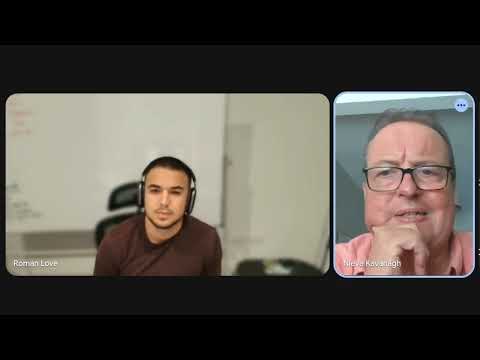
Watch the full interview with SRC North West. This page summarises what they told us on camera.
Full interview transcript
Read the full transcript of the SRC North West interview
Word for word from the video, with filler words such as “um” left out.
Rob, would you like to introduce yourself and talk a little bit about SRC? Yeah, of course. My name's Rob Deverson. I'm the senior business development manager at a company based in the Northwest called SRC, a solar roofing company, and our sort of area of specialization is initially coming away from the construction industry where we did a lot of roofing projects, we saw a growing need in the market for people who were looking to deploy solar and other renewable energy assets, but with buildings that were in need of some remedial work.
So by putting the two things together, both the roofing proposition and the solar proposition, plus any other renewable technologies that might be appropriate, we've effectively become a sort of a turnkey provider of, solutions that come in at a lower cost because there isn't the need to double up on access.
The... a lot of companies will repair their roof and a year later think about solar and have to go through the whole scaffolding process again, and that makes it quite expensive. Doing it all at the same time makes the whole thing more competitive, quicker to deliver, and, more, more cost effective for the customer.
100%. And yeah, I totally agree with you there, and I think you've got a really good niche there in terms of the services that you provide. A lot of solar providers wanna go for the straightforward installs, but you guys will be more creative with the solutions that you provide.
And that and I think that, really sets you guys apart. Okay, so how long have you been working with us so far? Been working with TNW for about two months now. Obviously understanding your business model, which is effectively lead generation. Yeah ... you've got a good team of people who are very active.
And I particularly like the sort of the volume of opportunity. They don't all necessarily perfectly match our, desired target audience, but I think that's something that between us working together in partnership, we, you know we both learnt where TNW's strengths are and where our sort of hotspots are, and I think the teams are now better aligned.
100%. Yeah ... and we just- we- we're just finding that we're getting on a regular basis now quite valuable leads coming through, and- Yeah ... whilst the process once the lead is opened that we follow is quite complicated, when you're changing energy infrastructure in anybody's building, big or small- Yeah
it is a fairly lengthy process of design, optimization, approval, sometimes planning, so there's quite a long time between initial contact with customer and final project delivery. But the early leads that we picked up from you and the three or four good ones were now at that point where just today we found one of our clients has actually given us a letter of authorization to approach the DNO.
And from experience in developing solar projects for a lot of years, that letter of authority is almost a spiritual buy-in from the client. It means they trust you to take over and work with them on the job in hand. So it's generally, it's 95% of the way there to the final sale, but it's not written that way.
Got them. It is just a process that you have to go through to connect to the grid. But it is- Yeah ... quite important because it shows the customer has faith and believes in the solutions that you've been talking about and putting forward. Oh, good. Yeah. And what sort of size is that project? That will be...
It's not the biggest in the world. The challenge with that particular site is it's a very old, part of British Steel in South Yorkshire, and the roof is not in very good condition. It's the landlord's responsibility, but you certainly wouldn't want to deploy solar across the whole space. So we've identified an area that would be suitable and sturdy enough for solar.
It'll be about 300 square meters, and it'll generate something in the region of 60 to 70 kilowatt hour, kilowatt peak from that array, and that should be sufficient. Basically it's a, it's a gaming warehouse and most of the energy is in two areas. One of them's lighting and one of them is in production.
They make some very specific rubberized mats for people who play games. Like war gamers and s- and the like, and they send them all over the world. Yeah. It's a really interesting business. It's almost like a cottage industry, but it has a global reach. Fair play. It's it's quite impressive.
And the desire is to take gas out of the equation because they spend a huge amount of money on high sheds with very poor insulation, particularly in the winter, to keep the place warm, 'cause they're open 12 hours a day. So if gamers are uncomfortable, they're not gonna come there, they'll go somewhere else, and in the summer it gets unbearably hot 'cause it's like a greenhouse.
So the desire is to implement an electric air condition system with solar to be the main, energy generation on site. So move away from gas altogether, which is great ' cause it will have an impact on their fossil fuel consumptions and make them more environmentally friendly. 100%. Yeah, no, that's great.
And linking back to our service, which part has been the most valuable to you guys, from from the sort of buyer standpoint, I think the thing that most impressed me when I first spoke to TNW was the fact that you were doing s- doing the sort of prequalification work that traditionally I've been used to doing.
Those discovery questions at first contact with clients, finding out about, how they're structured, what their billing looks like, how many meters they might have, any more information about site ownership, leasing if it was against owned, and those sorts of questions. They're all really important when you're considering renewable assets on sites.
Yeah ... sometimes a project won't take off simply because the lease isn't long enough to see the payback. Yeah. 12 or 15 years ago when solar started, it's its market penetration, lots of landlords were quite anti-solar 'cause they felt it might have a negative effect on the value of property.
Now they're most- Yeah ... mostly supportive because with solar on a roof, if they want to relet the building, there's often a premium rent to be had because the tenant won't be paying so much for energy. So landlords are quite pro-solar these days. 100%. And in terms of us, I mean- We, I like to pride, myself or us, trying to take that legwork out of the start of your process, right?
As you mentioned there, we wanna sort of skip, the initial stages of you even just trying to, find out whether or not they're interested. Obviously, go through the questions, lease questions, lease versus ownership, three-phase or single phase, usage available roof space, where the actual property is, where they would like the actual quote for solar, if they have any potential roofing issues at the moment.
All that sort of thing. We're trying to get that, we're trying to give you a full picture of the lead before we even book it in with you, right? And that's the thing that I like to think that really separates us is that, you're getting access to our production and you're essentially getting to cherry-pick from that production that we have generated to obviously go towards the opportunities that you feel most comfortable in closing.
So- Yeah. That's absolutely it. That's certainly how I'm finding the experience to date with TNW. You know- Yeah ... it's taken a, a couple of iterations to refine the right sort of clients for us. Yeah ... they have to be of a certain size. But I think the interesting thing is that we do quite a lot of work on behalf of other solar EPCs simply because we keep two business streams.
One of them is roofing only, and the other is roofing and solar. Yeah. But we'll happily support other solar EPCs if they need roofing work doing, and we'll not compete with them on the total project then. But we will dovetail with their installation plans again to help reduce the cost of access for the end client.
Yeah, 100%. And have you ever worked with any other sort of lead generators in the past? Yes. Personally, in different roles, I've used a few different organizations over the years. Typically they are the classic door openers. Would you be interested in talking to somebody about X, Y, Z? And that what is what sets TNW apart in as much as that secondary level of qualification has already happened before a lead gets i- is brought up to my attention.
So I can see straight away- Yeah ... the level of knowledge and understanding that the team at TNW is basically getting out from the customer before we even have to have that first contact. It's very helpful, and it makes the first conversation twice as valuable effectively because you haven't gotta go through the first 10 minutes of discovery.
Yeah. Yeah. No, I appreciate that a lot. And in terms of like actual key differences, do you notice any are they providing appointments typically or are they giving you like names and numbers? What's the actual sort of service that you've had in the past with other companies?
They will simply give you a name and a number. Wouldn't even necessarily book an appointment. They say, "Someone wants- someone's interested in talking." Away you go. Yeah ... and that's their job done. There's different models obviously for how it's done. You can pay per lead, or you can pay for the service on a per day rate, whichever.
But it's trying to find that person. And I think in, with TNW, we've found something that's a little bit different, which is that you do that extra bit of qualification upfront. Yeah. And that makes- Absolutely ... that makes the lead more valuable when it lands on somebody's desk like me, whose responsibility is to develop that opportunity into some serious business.
So- Yeah ... it's working well. And in terms of the sort of average deal size that we're bringing you at the moment, what is that so far? The thing, effectively the ones that I've sat and are developing, you have your online tool, which is great 'cause you can monitor. It's a bit like a internal CRM system I suppose, where you can, you can see the lead, you know what the last, when the first contact was.
Yeah. We haven't got to the point where we're adding notes yet, if there is a, an update on an account, I normally do that through the WhatsApp group that, Yeah ... your team that I work with just to keep them in the loop. But yeah, this is all part of the fact that the process from that first connection with client who wants to have a conversation, it's several months before you c- you're looking at deploying stuff in the solar world simply because the time the processes take- Yeah
with the design, DNO application and the like. There's quite a lot of work to do b- from first contact to potential end delivery But so far the leads that we've got are, one array's probably going to be about, as I said, about 60 in that gaming shed, 60 kilowatt peak. Yep. One is likely to...
We scaled it back a little bit 'cause we've done some uses matching on a chemical etching plant that produces electrical components for various things. We could have flooded the roof, but they wouldn't have had any- anywhere for the energy to go that they didn't need. So we scaled that back, and it's probably about 120 kilowatt peak.
Okay. And there's a couple more which are under development at the moment. We haven't yet established most appropriate size through our design team, but again, still a work in progress. 100%. And in terms of communication with our colleagues, have you found the customer service to be useful and helpful? Yeah, very good. I think that two-way dialogue, w- whatever partnership, you have, and we have a number of different partnerships with people like, funders and procurement organizations who've got customers who want the sort of services we can offer.
The key thing that makes all those work is a really good flow of communication in two directions. The worst thing is putting stuff out there and getting no feedback. That is the most frustrating part of a partnership. And I think for me, that would be a showstopper if I was working with somebody and I was feeling that I wasn't getting any sort of feedback on the stuff.
For us to build a proposal is quite a lot of effort and work, and a lot of knowledge and experience that we're putting into it, and if that just seems to be not valued, then that tells me something deeper about probably the strength of the partnership and the, perhaps even the skillset or understanding of the people that I'm dealing with.
Yeah. It's, it's something that is really important to me personally, that there is interaction and two-way dialogue on a regular basis. Yeah. And that's something that, we really invest a lot of money into and invest a lot of time into making sure that our CSMs, client success managers, are always in touch with you whenever you need them, always on the end of the phone if you ever wanna get in contact with us.
We've obviously got two at the moment, and then obviously manage- Manager Joe. So yeah we're continuously invested in that side of things and trying to make, a better customer experience on the customer service side of things. And one final question, would you recommend us to other companies looking for consistent flow of work? I think that's why I'm here, isn't it?
Yeah, no, appreciate it. And when, from a purely selfish point of view, the answer would be it depends on what sector. I'm not gonna tell all my- Yeah ... opposition about you. Yeah. No, for sure. But
you know- I appreciate that ... generally there's in, in what is quite a buoyant market, there is a lot of work to go around, and we espouse the philosophy of one of mutual support rather than one of, growling at one another because they might have a similar product line or a similar service to us, and that's why we split our services out.
It's why we do the roofing as a separate, completely non-competitive thing with other solar EPCs. And w- what happens in the marketplace is they get to trust you, and after time, there might come a time when they've got a job that is too big for them to handle, or they haven't got the resources available.
Yeah. They ask us for help and, we work together on these things, and it's quite a healthy sort of way to, to, to approach the market, I think. Perfect. 'Cause there's always times in solar when you get boom and bust. And when you have a boom time- Yeah ... you can't take on three times the number of staff but letting them go after three months when the job's done.
You have to subcontract, or you've gotta- Yeah ... look at sharing resources across the industry because whilst it's a big market, the skill sets that you'd need for, large renewable energy installations, not just solar but other technologies as well, they are still... It's not millions of people out there that can have the right knowledge, it's a relatively small number of people who truly get the industry.
100%, yeah. No, I totally agree ... so I think that's, that, that's another really important element to it all. Yeah, no, I appreciate it a lot
- Interviewee
- Rob, senior business development manager
- Business
- Solar roofing company, North West England
- With TNW at interview
- About two months
- Arrays in development
- About 60 to 70kWp and about 120kWp
Who SRC North West are
SRC is a solar roofing company based in the North West. It came out of construction and roofing, saw demand from businesses that wanted solar on buildings needing remedial roof work, and now delivers both together as a turnkey service, so the customer pays for access and scaffolding once. It also does roofing-only work for other solar EPCs without competing with them on the solar.
The situation
Rob had used several lead providers in previous roles. He describes them as door openers that hand over a name and a number, often without even booking an appointment, which leaves the installer to do all of the discovery.
Commercial projects also take months from first contact to delivery, through design, DNO applications and sometimes planning, so the quality of the opening conversation matters.
What TNW delivered
What impressed Rob most was that TNW does the pre-qualification he was used to doing himself: how the business is billed, how many meters it has, whether it owns or leases the site, roof space and any roofing issues. Lease length matters because a short lease can stop a project paying back.
The volume let SRC pick the opportunities that fit its niche, and a couple of rounds of feedback aligned the two teams on the right kind of client. Rob tracks leads in the client portal, which he likens to an internal CRM, and gives updates through the WhatsApp group.
One early lead was an old steel building in South Yorkshire where the landlord's roof was in poor condition. SRC identified about 300 square metres that could take an array of roughly 60 to 70kWp, as part of the business moving off gas. Another, at a chemical etching plant, was sized at about 120kWp after usage matching.
The model behind it is the same for every installer: TNW finds and qualifies the business, books the meeting into your diary and you pay per qualified, attended appointment, not per raw enquiry or a monthly retainer. Read how pay per appointment commercial solar leads work, or see the checks behind each booking in how to qualify commercial solar leads.
Results
- Better leads, less legwork: TNW pre-qualifies every lead (billing, meters, ownership vs. lease, roof space, roofing issues) before handoff, unlike past providers who just gave names and numbers.
- Real pipeline in ~2 months: 3 to 4 strong live opportunities, including one 95% to close (letter of authorization to approach the DNO), plus ~60kWp and ~120kWp arrays in development.
- Cherry-pick from consistent volume: steady lead flow lets SRC selectively pursue the best-fit opportunities for their roofing + solar niche.
- Strong communication: responsive client success managers, WhatsApp updates, and CRM-style tracking, and he'd recommend TNW to others.
Want results like SRC North West?
TNW Marketing books pre-qualified, exclusive commercial solar site meetings for installers. TNW's show rate is 60%+, and you pay per qualified, attended appointment with no retainer and no minimum spend. See the commercial projects ready for survey now.
More client results
 Solar Solutions case studyEngaged, vetted commercial customers and more leads than he could keep up with.
 Ingeni Renewables case studyWork won directly from TNW leads, including a straightforward ~36kW system with a purchase order in.
 Ignite Mechanical case studyGenuine commercial leads with people actively looking, average deals of 10 to 50kW.
See all 28 commercial solar installer case studies, plus residential solar results.
Related guides for installers
- Pay per appointment commercial solar leads
How paying per attended site appointment works, how it compares with pay per lead and retainers, and what counts as an attended meeting.
- Solar leads UK: compare providers
Solar installer leads for sale in the UK: 12 providers compared on lead type, price, contract and no-show terms, and pay per appointment from £250.
- Lead Pronto alternatives for solar installers
What Lead Pronto offers, from its own website, and six alternative UK solar lead suppliers compared on lead type, exclusivity, price, contract and no-shows.
- Exclusive vs shared commercial solar leads
What each costs and why, who carries the no-show risk, how to check a supplier's exclusivity claim, and when shared leads can make sense.
- In-house vs outsourced lead generation: the real cost
What an in-house appointment setter really costs, line by line, against buying booked appointments, with a cost-per-meeting calculator.
- Pay per lead vs retainer vs pay per appointment
Cost, risk, contract terms and lead quality side by side, and when a retainer can still make sense.
- Choosing a solar marketing agency
Full-service agencies, lead suppliers and pay-per-booking lead generation compared, the channels that win commercial work, and what to ask before you sign.
- Renewable energy marketing agency (UK)
Renewable energy marketing services compared, inbound vs outbound, retainer vs pay per booking, and why commercial solar is the one thing TNW does.
- Appointment setting for solar installers
What appointment setting is, how agencies charge, in-house vs outsourced setters, UK rules on B2B calls and email, and what to ask before you sign.
- Commercial solar tenders and frameworks
Where UK solar PV tenders are published, which public sector frameworks have solar lots, what buyers ask for and how bids are scored.
- Commercial solar PPAs for installers
How a rooftop or private wire PPA works, the parties and contract terms, which customers qualify, what funders ask for, and the alternatives.
- Public sector solar funding: PSDS, Salix and GB Energy
What has closed (PSDS) and what is open now: Great British Energy solar for schools and the NHS, Salix loans in Scotland and Wales, and how installers win the work.
- Offering finance on commercial solar
Hire purchase, leasing and PPAs compared, and when the FCA rules on credit broking apply: individuals, the £25,000 business exemption and introducer ARs.
- Solar EPC contractors explained
Engineering, procurement and construction vs design and build, the FIDIC, NEC and JCT contract forms, typical EPC terms and subcontracting to an EPC.
- VAT, CIS and the reverse charge on commercial solar
The VAT rate on commercial jobs, when the construction reverse charge applies, invoice wording, and CIS registration, deductions and returns, from HMRC.
- Roof overcladding or replacement before solar
For roofers and solar installers: overclad or re-roof first, asbestos and structural checks, RC62 fire classification, the Part L upgrade, sequencing and tax.
- UK solar statistics: the commercial market in numbers
Official UK solar statistics: capacity and installations by size band and region, growth trends, 2030 targets and business energy prices, all with sources.
- UK commercial solar statistics (data tables)
Year-by-year DESNZ tables since 2010: capacity and installations by size band, the commercial bands month by month, generation and share of electricity, with a CSV.
- LinkedIn lead generation for commercial solar
Win commercial solar site surveys from LinkedIn: who to target, Sales Navigator vs free, example messages, LinkedIn's limits and the UK data rules.
- Cold email for commercial solar
Cold email for commercial solar: who to email, UK rules (PECR, UK GDPR), deliverability set-up, example emails and follow-ups, and what it really takes.
- Cold calling commercial solar
Book commercial solar site surveys by phone: call lists, TPS/CTPS screening, switchboard, opening, qualifying and objection scripts, and the UK rules.
- Commercial solar prospecting from public data
Build a target list before you call: Companies House SIC codes, the EPC and DEC registers, Land Registry ownership data and SECR energy reports.
- Commercial solar installer case studies
Video interviews with installers using TNW: site meetings booked, system sizes, deals closed and what changed for their business.
- Lead calculator
Work out how many site surveys and leads you need to hit your monthly installation target, from your own booking and close rates.
- Solar cost per lead calculator
What each signed job really costs you, profit after lead spend, and the most you can pay per lead or booked appointment, with a side-by-side comparison.
- How to generate commercial solar leads
The channels UK commercial installers use to book site surveys, what "qualified" really means and the numbers to track.
- How solar leads are priced
How solar leads are priced: per lead, per booked or attended appointment, retainer or revenue share, and shared vs exclusive.
- How much do solar leads cost? UK price list
Cost per lead vs cost per booked meeting, what drives the price, and how to work out what you can afford to pay.
- Solar lead follow-up: speed to lead and no-shows
Call new leads within minutes, a first-week follow-up plan, confirming the survey twice and the five reasons booked surveys don't happen.
- How to qualify commercial solar leads
A five-point checklist and the first-call questions that stop surveyors driving to sites that will never sign.
Browse every installer guide on the guides hub.